
The effectiveness of planning emerges from thorough, well-executed, and efficient planning. I arrived at this thesis statement while serving as a leader at a group work camp in Japan. It became evident when I witnessed how a carefully devised structure forms the basis for Japan’s progress as a nation excelling in science and technology and how Japanese society incorporates these advancements while upholding the esteemed principles passed down by their ancestors. In my personal experience, I consider myself fortunate because my meticulous planning resulted in the successful implementation of the group work camp in Japan.
After COVID-19 struck, the Group Work Camp in Japan became the first initiative by GREAT Indonesia to be implemented overseas. This program signifies the solid partnership between GREAT Indonesia and NICE Japan. It involves the participation of SMA and Pesantren Bumi Cendekia Yogyakarta, local partners joining the program in Japan from 11th September to 23rd September. The program is rooted in environmental concerns, the COVID-19 pandemic, and societal issues like healthcare, poverty, and social unrest. “Sustainable Future” aims to prepare young people from different countries to address these challenges. It is crucial for young individuals, including students from Islamic boarding schools, to recognize their role in promoting sustainability and working towards a sustainable future.
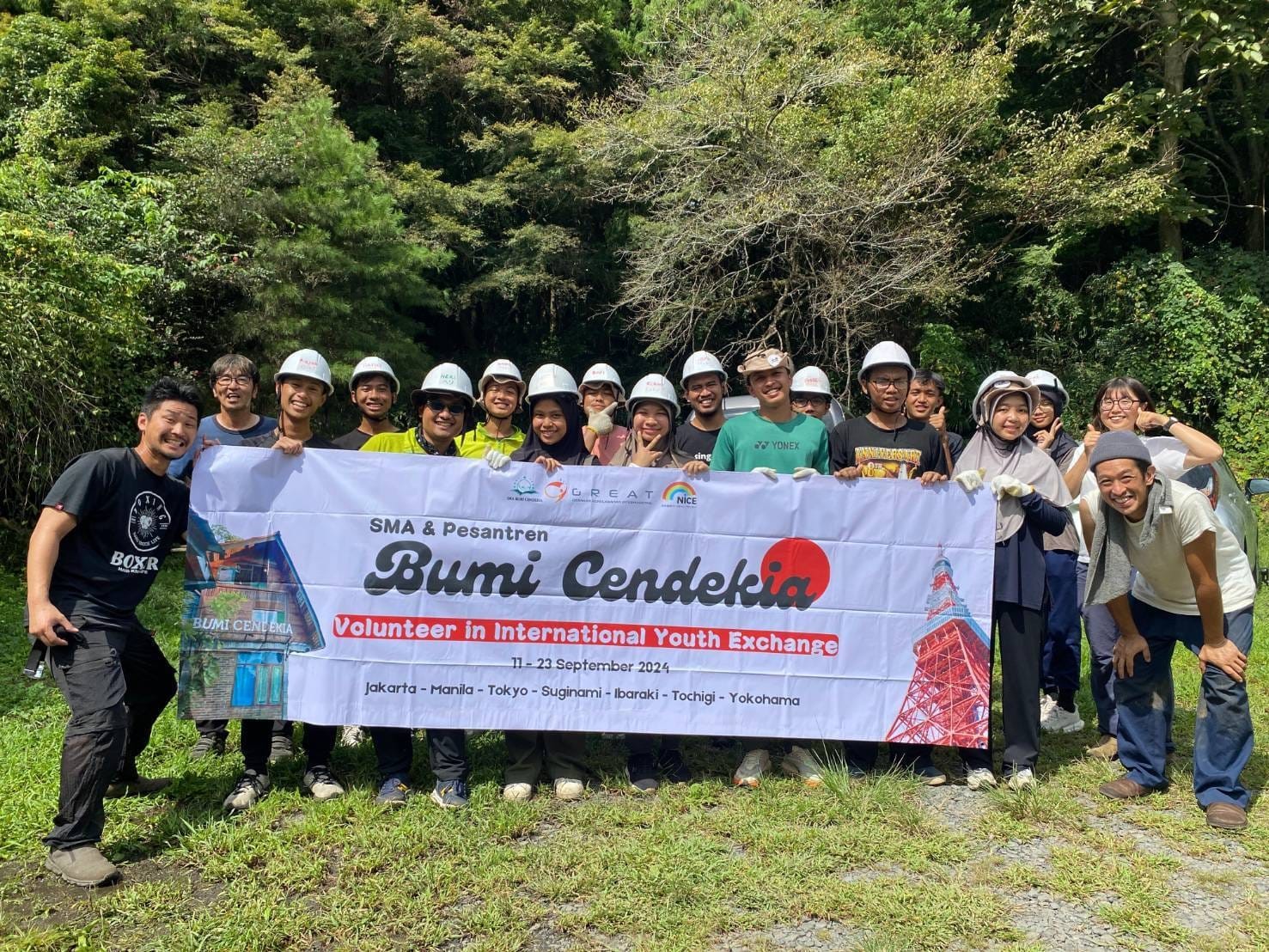
SMA and Pesantren Bumi Cendekia consider field studies and social volunteerism in Japan as practical ways to achieve their educational objectives. These experiences aim to prepare a new generation of Muslims to become global citizens concerned about humanitarian issues, reflecting the Islamic principle of Rahmatan Lil Alamin (Islam as a blessing for all creation). Moreover, this program, known as the International Youth Exchange for Sustainable Future, is dedicated to addressing environmental concerns through a series of visits to various established connections in Japan. These include Suginami Sogo High School, the Embassy of the Republic of Indonesia in Tokyo, the Islamic Boarding House of the Nahdlatul Ulama (NU) at-Taqwa Ibaraki, and a project focusing on environmental issues in Tochigi prefecture, which is being carried out in collaboration with a local partner of NICE Japan, the Tochigi Conservation Corps (TCC).
Being a camp leader is quite a personal challenge for me. This is not only due to the fact that there are 13 participants but also because some of them have never traveled abroad before. I believe it’s an opportunity to understand the true essence of ‘responsibility.’ Being a camp leader is a way for me to test whether I can effectively work with a team of students. In my past experiences, I have always worked with peers or even older individuals. Can I handle this new dynamic? I think that through this experience, I will develop a more adaptable and flexible approach to working with individuals of all ages and handling various challenges in a professional setting. Starting from dealing with challenges and concerns, I have learned to meticulously plan, be resourceful, and anticipate potential risks, principles that I have acquired from GREAT Indonesia.
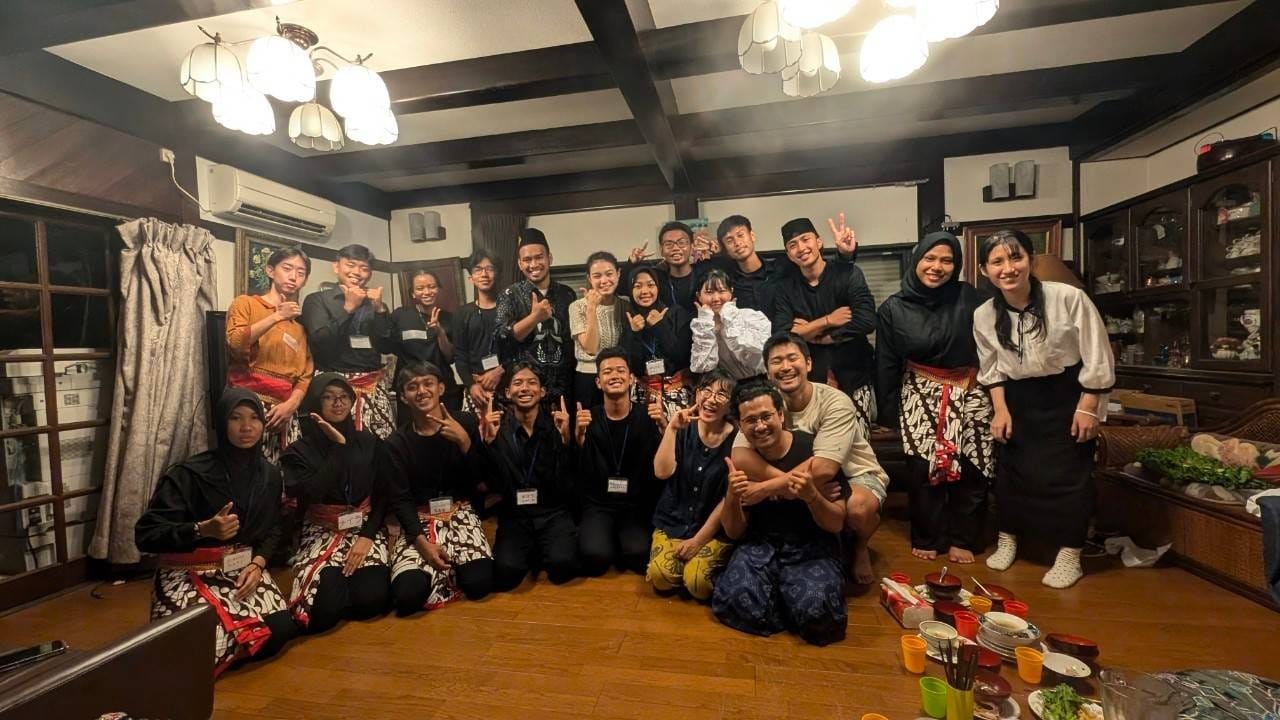
Also, my friends from Bumi Cendekia attend Islamic boarding schools. This fact motivates me to participate in this program and to inspire my friends at the boarding school, who usually only engage in internal activities, to participate in international activities. I am excited about encouraging my friends at the boarding school to participate in international activities through this program. I believe that everyone, including students at the boarding school, should have the opportunity to gain international experience. In addition, this article will discuss the key points I focused on during the Group Work Camp.
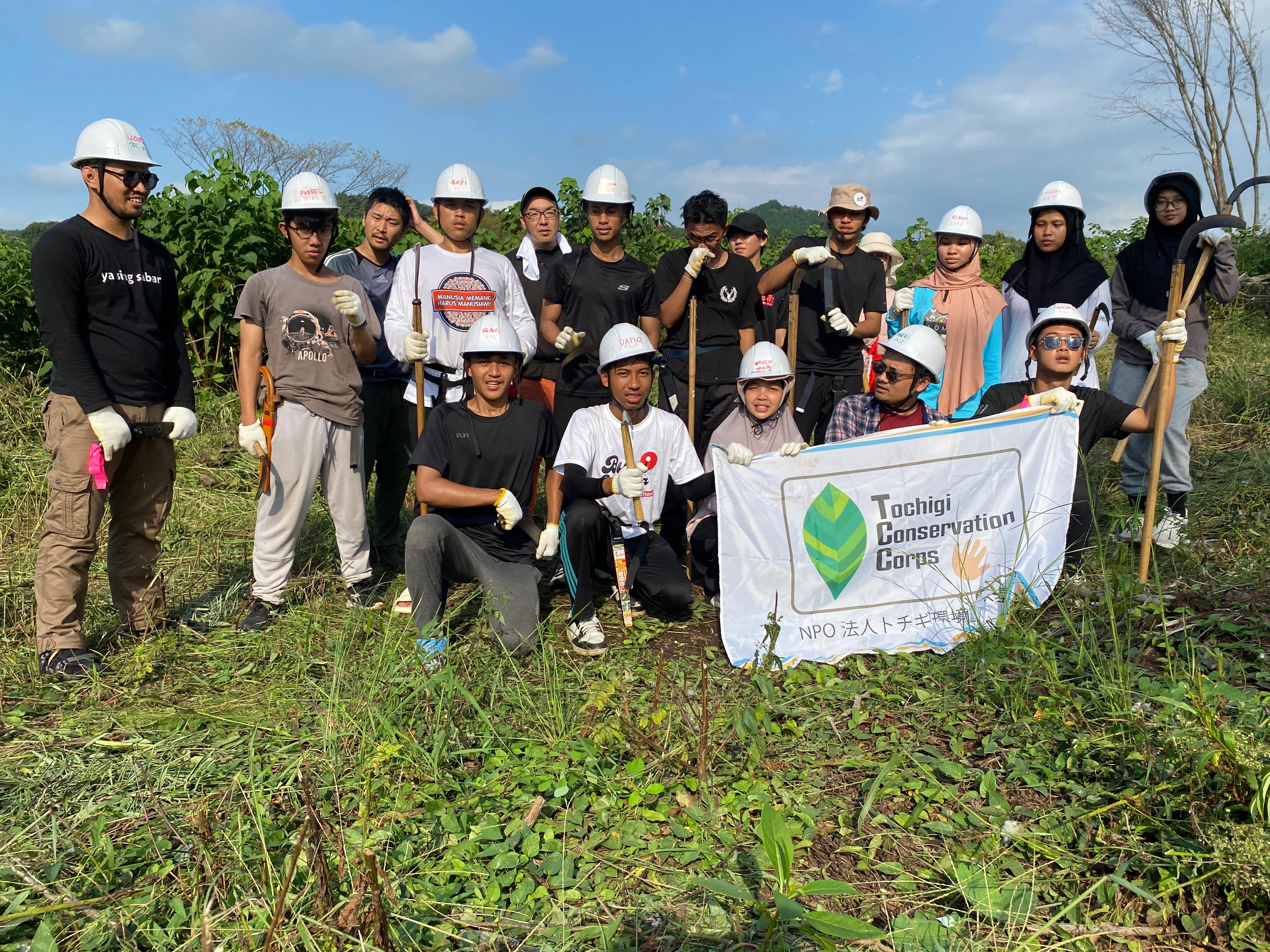
Our initial volunteer event involved conserving forest land. What made this event interesting was the incorporation of a work-life balance system. We thought it was too early to take a break after beginning work, and the work only lasted about 1 hour. Despite feeling tired and sweaty, we were content with what we accomplished. Additionally, on the first day, TCC introduced an innovation by organizing a welcoming party in between volunteer activities with students from Utsunomiya University. During this event, we enjoyed several popular Japanese songs among Indonesians. Consequently, I can say that the first day was a way for TCC to educate us about work planning, which must be intertwined with nature, time management, discipline, and, most importantly, work-life balance, encompassing rest and entertainment. These aspects serve as evidence of a well-thought-out plan resulting in effective work.
On our second day, we spent time cutting Bamboo with local residents in Japan. One exciting aspect of this day was the wide age range of participants in this volunteer activity. People as young as eight years old (Akari-can) and as old as their 80s took part. This demonstrates that local Japanese residents have a well-developed system for raising awareness about the need to protect nature. I wondered about their motivation for engaging in these activities and when this culture began. One possible explanation for these questions is that Japanese schools have a curriculum that teaches the value of cherishing nature, and one tangible way to do so is through volunteer work. This explanation addresses all of my questions, leading me to conclude that a well-designed educational curriculum can significantly influence the formation of a society. What about Indonesia? The readers must already know the answer 😀
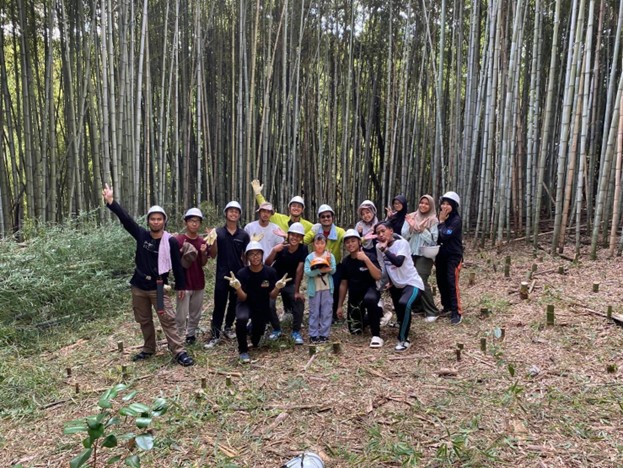
Meanwhile, our program in Japan prompts numerous questions. One of them is why we focus on forest conservation and bamboo logging in Japan. These activities may appear insignificant, but I believe that the impacts of these activities are substantial. There are also questions about the necessity of conducting volunteer activities abroad that specifically address environmental concerns. Personally, I view these activities as a means to protect and reinforce the interconnectedness of ecosystems in Japanese forests and as a response to the issue of depopulation in Japan and the threat of Bamboo as a pest damaging the forest ecosystem. Engaging in these activities allows humans to reconnect with nature, which is significant to me as a young researcher at the Center for Religious and Cross-Cultural Studies, Gadjah Mada University, where my research revolves around Religion and Ecology. This practical involvement is an embodiment of the theoretical concepts I work with. I find great fulfillment in connecting classroom knowledge and field experience within these voluntary activities. Although these volunteer activities are demanding, we derive genuine enjoyment from every nature-related task.
I sincerely appreciate the preparation we underwent in less than two months to participate in this program. This preparation enabled us to execute all the planned activities smoothly. We carefully considered every opportunity, challenge, and potential risk that might arise. It’s worth noting that we stuck to our plan and saw it through to the end despite unforeseen factors that couldn’t be anticipated or controlled. Nonetheless, effective planning is crucial for successfully carrying out a program involving multiple participants. In conclusion, I reiterate the thesis statement of this article: good planning is essential for establishing a societal system or ensuring the success of a program.
29th September, 2024
Suheri – A Group Leader and Representative of GREAT Indonesia
